Mount Pleasant Waterfront Lifestyle: Harbor vs. Marshfront
July 16, 2026
July 16, 2026
If you picture life in Mount Pleasant as one long water view, you are only seeing part of the story. Here, waterfront and marshfront living can feel very different from one street to the next, and that difference matters when you are choosing a home that fits your routine, priorities, and comfort level. This guide will help you understand how Mount Pleasant’s shoreline areas function day to day, what amenities support the lifestyle, and what tradeoffs to weigh before you buy. Let’s dive in.
Mount Pleasant’s water-focused identity centers on places like Shem Creek, Charleston Harbor, and the Old Village. The town’s historic district is tied closely to harbor and creek boundaries, which helps explain why water is such a defining part of the local setting.
In simple terms, waterfront in Mount Pleasant often means frontage on the harbor or a creek. Marshfront usually refers to homes along tidal marsh edges with open views, changing tides, and a more layered shoreline experience. That distinction shapes everything from the scenery outside your windows to your flood awareness and maintenance expectations.
A harborfront home often brings broad water views and a stronger sense of openness. A creekfront setting, especially near Shem Creek, can feel more active because it is tied to boating, fishing, and a long-standing working waterfront.
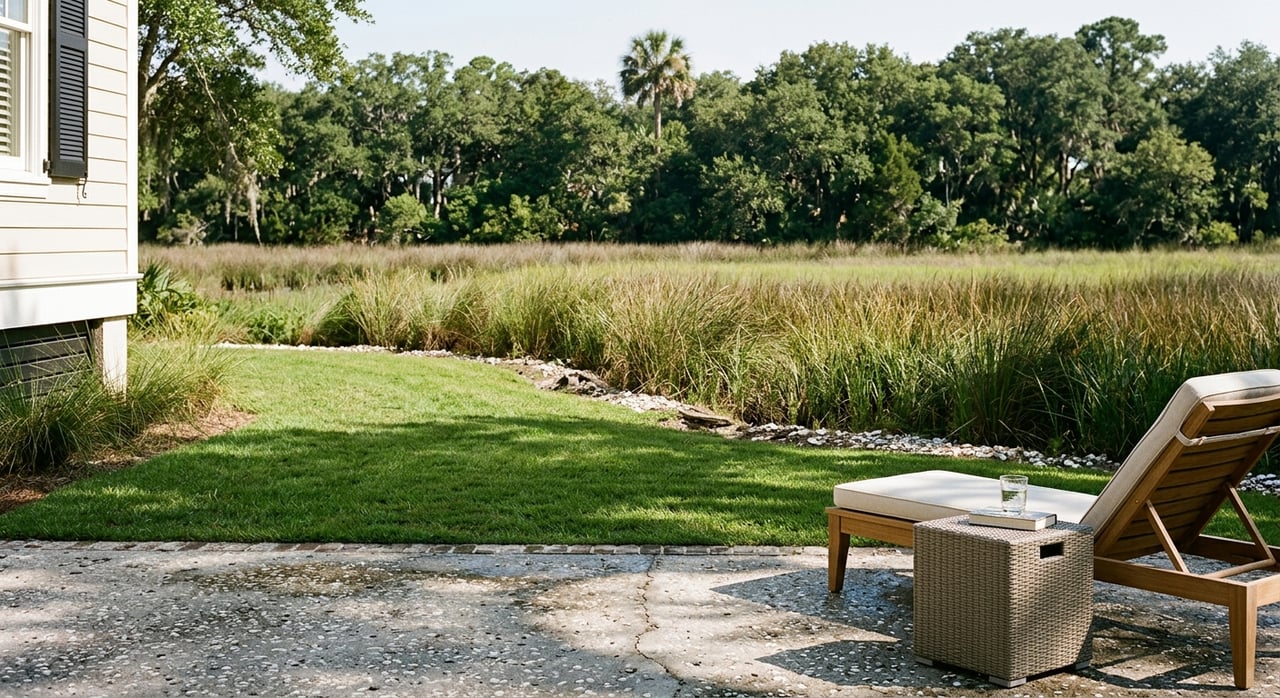
A marshfront home usually offers a quieter visual rhythm. You may see grasses, tidal movement, birds, and changing light across the marsh, which creates a scenic setting that feels distinctly Lowcountry without being directly on open water.
The phrase “on the water” can mean very different things in Mount Pleasant. A home on Charleston Harbor, a home on a tidal creek, and a home on a marsh edge may each deliver a different daily experience.
That difference also affects practical planning. Access, views, exposure, and flood conditions can vary from block to block, so the setting deserves as much attention as the house itself.
Shem Creek is one of the clearest expressions of Mount Pleasant’s water-based lifestyle. The town describes it as a tidal tributary with direct access to Charleston Harbor and notes that it has served as a traditional harbor for local residents for more than 300 years.
What makes Shem Creek stand out is that it is not just scenic. It is an active, working waterfront, which gives the area a different energy than a purely residential shoreline.
Shem Creek Park supports everyday use with ADA access, fishing, parking, restrooms, and a walking trail. The town says improvements created a continuous public boardwalk from Coleman Boulevard to Charleston Harbor, making the area more connected and easier to enjoy on foot.
For you as a buyer, that means the creek lifestyle is not limited to property owners with private frontage. Public spaces make it easier to build water into your daily routine, whether that means a morning walk, an evening stroll, or time spent near the docks and harbor views.
The town began renovating and rebuilding the Shem Creek Shrimp Docks and Shrimp Processing Facility in 2024. That work is intended to preserve shrimping heritage and support the local economy, which reinforces that Shem Creek is more than a backdrop.
This matters because lifestyle value in Mount Pleasant often comes from authentic local function, not just appearance. If you are drawn to a water-oriented setting with real activity and long-standing maritime roots, Shem Creek offers a strong example.
Memorial Waterfront Park is another major piece of Mount Pleasant’s waterfront lifestyle. Located at the base of the Ravenel Bridge, the park offers a 1,250-foot pier, harbor views, lawn space, a playground, and cafe seating.
In 2025, the park’s Phase III expansion added a splash pad, inclusive playground, basketball and pickleball courts, restrooms, a pavilion, dog parks, exercise space, and parking improvements. Earlier work also added floating docks for daytime transient use and support for public safety boats.
This park helps make harborfront living feel accessible even if your home is not directly on the shoreline. You can enjoy views, public gathering space, and a wider mix of recreation without needing private water access.
That is one reason Mount Pleasant often appeals to buyers who want a water-centered lifestyle with everyday convenience. The lifestyle is supported by town infrastructure, not just by private lots.
For many buyers, water access is only part of the equation. The other part is whether a town has the services and systems to support life near the harbor, creeks, and marshes.
Mount Pleasant backs its water-oriented setting with public safety resources. The town’s Marine Patrol handles waterway enforcement, aid to disabled watercraft, and boating safety, while the Fire Department’s Water Rescue team serves Charleston Harbor and surrounding waterways across a 52.59-square-mile response area.
These services add practical value to the lifestyle. If you spend time on the water, own a boat, or simply want confidence in the area’s preparedness, these systems are part of what makes coastal living more functional year-round.
They also reflect how surrounded by water Mount Pleasant really is. In this market, water is not a feature on the edge of town. It is woven into how the town operates.
Water views matter, but so does how easily you can move through town. Mount Pleasant is building more connection into daily life through trail and path planning that links parks, recreation areas, neighborhoods, commercial zones, and other destinations.
The Mount Pleasant Way project is a proposed network of connected multi-use paths for commuting and recreation. The town’s Pedestrian and Bicycle Accommodations Program also focuses on safer non-vehicle travel and active living.
This broader connectivity gives water-adjacent living more day-to-day usefulness. It supports the idea that Mount Pleasant sits somewhere between a conventional suburb and a more island-like environment.
Recent trail work like the Scanlonville Praise House Trail is designed to connect Waterfront Park with Scanlonville and the Remley’s Point Community Center. For you, that can mean easier access to public spaces and more ways to enjoy the waterfront setting without getting in the car every time.
The biggest tradeoff in low-lying waterfront and marshfront areas is flood exposure. The town says Mount Pleasant experiences both localized drainage flooding and storm-surge flooding, including V and VE coastal hazard zones.
The town also directs residents to flood hazard resources and FEMA maps, which shows how important location-specific review is during your search. This is especially true near tidal edges and lower-lying shoreline areas.
In June 2026, the Town’s Flood Resilience Committee reported tidal-driven flooding at Remley’s Point and overtop conditions at Royal Avenue and William Street Extension. Marsh-edge vulnerabilities were also noted at Ravens Run.
That does not mean every waterfront or marshfront home carries the same level of concern. It does mean you should evaluate each property in context, with close attention to its exact setting rather than relying on a broad neighborhood label.
When comparing homes, it helps to ask:
A careful review of these points can help you separate a beautiful view from a sustainable fit for your goals.
Mount Pleasant offers a balance that many buyers find appealing. It is more water-centered than an inland suburb, but it also has a larger year-round residential base and the town services that come with it.
The Census estimates 95,469 residents in 2025, with a 73.6 percent owner-occupied rate, a median owner-occupied home value of $748,500, a median household income of $124,755, and a mean commute of 24.9 minutes. Together, those figures support the idea of a community that is scenic but also established and functional.
If you want a home that connects you to the Lowcountry’s waterways without giving up convenience, Mount Pleasant often fits that middle ground well. You can enjoy harbor and marsh settings while still benefiting from parks, trails, public amenities, and a substantial residential community.
That blend is especially important for second-home buyers, relocating buyers, and anyone looking for a lifestyle purchase that still works in everyday life.
The best waterfront or marshfront choice is not always the one with the biggest view. It is the one that aligns with how you want to live, how often you will use the home, and how comfortable you are with the realities of a coastal setting.
In Mount Pleasant, that means looking beyond marketing phrases and focusing on the property’s exact relationship to the harbor, creek, or marsh. A tailored search can help you narrow in on the lifestyle that feels right, whether you value activity, privacy, scenery, or easier day-to-day access.
If you are considering a waterfront or marshfront purchase in Mount Pleasant, working with a local advisor who can help you compare setting, access, and property-specific tradeoffs can make the process far more efficient. For tailored guidance and concierge-level support, schedule a private consultation with Gus Bright.
With an intimate knowledge of the Charleston Low Country area, Gus Can help you find your personal version of Luxury Island Living.