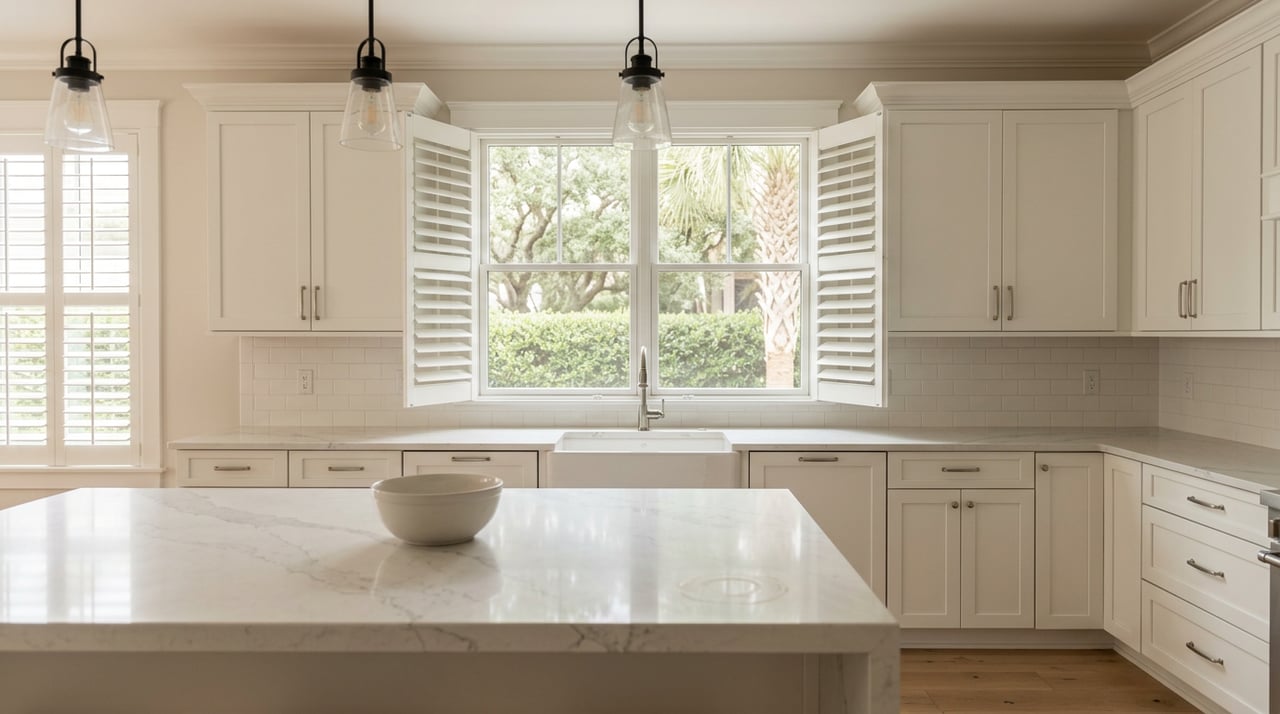
Isle of Palms Beach Renourishment 2026 Updates
August 13, 2026
August 13, 2026
Walk the sand behind Ocean Club or Seascape this week and you will hear it before you see it. Backup alarms. The low grind of a dozer working a 300-yard fenced stretch. A pipe running down the beach like a garden hose scaled up by a factor of a thousand. Walk the sand near the pier instead, or south toward Breach Inlet, and none of that exists yet. Same island, same week, two entirely different beaches.
That split is not an accident of timing. It is the whole shape of what is happening on Isle of Palms right now, and it explains why so many locals are getting conflicting answers about when the noise ends.
The city's 2026 beach renourishment project is being built in three sequential passes, not one continuous event, and each pass has its own address. Reach 1 covers the stretch from Mariner's Walk north to Ocean Point Drive and was scheduled to run from early July through mid-August. Reach 2 picks up from the Wild Dunes Property Owners Beach House and moves south to 56th Avenue, with an official window of August through early September. A third reach, covering the island's south end near the pier and Breach Inlet, comes after that.
Here is where it gets useful to know your geography. As of the city's August 1 update, contractor Marinex was five days into active dredging and working in front of the Shipwatch area, inside a fenced construction zone of roughly 300 yards, placing about 30,000 cubic yards of sand a day. The city flagged that beach access paths near Seascape and Port O'Call could see temporary closures in the coming weeks, once the existing beach narrows too much for pedestrians to pass safely around the work zone.
Here is the schedule as it currently stands, though the city itself notes every date is an estimate subject to weather and other delays:
| Reach | Area | Window |
|---|---|---|
| Reach 1 | Mariner's Walk to Ocean Point Drive | Early July through mid-August |
| Reach 2 | Wild Dunes POA Beach House to 56th Avenue | August through early September |
| Reach 3 | South end, toward the pier and Breach Inlet | Estimates range from mid-September to November 1 |
That last row is the part worth sitting with. One report on the project's early timeline put the final southern stretch beginning in mid-September. A more recent estimate from the Post and Courier put that same work starting November 1. Neither is wrong. Both are honest snapshots of a schedule that keeps sliding as the crew learns the actual pace of the beach in front of them. If you live south of the pier, the practical takeaway is not "circle a date." It is "check the city's beach restoration page before you plan around a specific week," because the island's own contractors have not agreed on one yet.
The good news, confirmed across every update so far, is that the beach itself never fully closes. Crews fence off the active construction zone in roughly 300-yard sections and move through at a rate of 100 to 300 feet a day, so the disruption is a moving front rather than a fixed obstacle. Once a section is finished, the city installs walkover ramps over the sand pipe so people can get back onto the freshly placed beach.
As reported by the Post and Courier, Coastal Science and Engineering president Steven Traynum, who briefed City Council on the project in June, described the point of all of it simply:
"It allows you to maintain a healthy beach system."
Two details matter more than the noise complaints. First, Marinex will not pump sand under decks, patios, or porches. Sandbags handle that instead, so oceanfront structures are shielded rather than buried. Second, nighttime turtle monitoring runs alongside construction through nesting season. If a female comes ashore to nest inside an active work zone, crews establish a buffer around her, and the Island Turtle Team relocates any eggs found in a hazardous spot. It is one of the few places where a $30,000-cubic-yard-a-day industrial operation is built to stop for a single turtle.
The full project calls for up to 2.5 million cubic yards of sand across roughly 19,200 feet of shoreline, split between about 1.7 million cubic yards in Wild Dunes and 800,000 on the island's south end. That imbalance is why the Wild Dunes stretch is absorbing most of the disruption this summer while the south end waits its turn. City leaders expect the finished beach to hold for eight to ten years, based on how long the last major renourishment, completed in 2018, lasted.
While the sand crew works its way south, the city is also tackling the other daily friction point: getting on and off the island. On August 4, city leaders announced plans for an AI-controlled traffic signal at the intersection of Palm Boulevard and the Isle of Palms Connector, the chokepoint that turns beach-season afternoons into a parking lot. Deputy city administrator Sean Kuester described a system that detects vehicles accumulating at the intersection in real time and adjusts the signal dynamically to clear the backup, rather than running on a fixed timer that ignores whether traffic is actually there.
The catch is timing. This is a March 2027 project, not an August 2026 one. So the beach work finishing this fall and the traffic fix arriving next spring are on completely separate calendars, which means residents get relief from one kind of congestion well before the other.
There is a smaller, quieter version of the same pattern happening in the Front Beach parking lot. When Dominion Energy removed hundreds of palm trees during utility work, a community effort called Plant-a-Palm 2.0 sprang up to replace them, an echo of the original Plant-a-Palm campaign that restored the island's tree line after Hurricane Hugo. The first 45 trees were planted this spring in the lot between Pavilion Drive and 14th Avenue, with roughly 90 more still on the way, all without losing a single parking space. Drew Waddell of Creative Outdoors handled the planting, and Public Works staff Robert Asero and Lenton Sharpe are managing the watering and upkeep as the new trees take root, according to reporting from Lucky Dog Publishing. Organizers describe that lot as the island's front door, and the goal is simply to make it feel like one again.
Like the traffic signal, this is not a this-week story. It is a this-year story, arriving in batches rather than all at once.
Amid three separate infrastructure projects running on three separate clocks, one island ritual has stayed exactly the same. The South Carolina Aquarium partners with the Isle of Palms Cleanup Crew for a beach sweep every Monday, with sign-in at the public beach walkover and supplies provided for anyone who wants to spend an hour collecting litter and contributing to the data set. It is the one recurring fixture on the island's calendar that construction schedules, funding timelines, and contractor estimates have not touched.
That contrast is the real story of Isle of Palms this month. Big, visible projects, each moving at its own pace, layered onto an island that still runs its smallest weekly habits without interruption. If you live north near Wild Dunes, your August sounds like machinery. If you live south near the pier, yours still sounds like August. Both are true descriptions of the same island on the same day, and the gap between them will keep moving south until the sand does.
If you own property along any stretch of this shoreline and want a clearer read on what these changes mean for your specific address, from renourishment timing to how it factors into your home's long-term value, Gus Bright is happy to walk through it with you. Schedule a private consultation whenever it's useful.

With an intimate knowledge of the Charleston Low Country area, Gus Can help you find your personal version of Luxury Island Living.